
AI in Prop Trading: How Intelligent Tools Are Changing Risk & Strategy
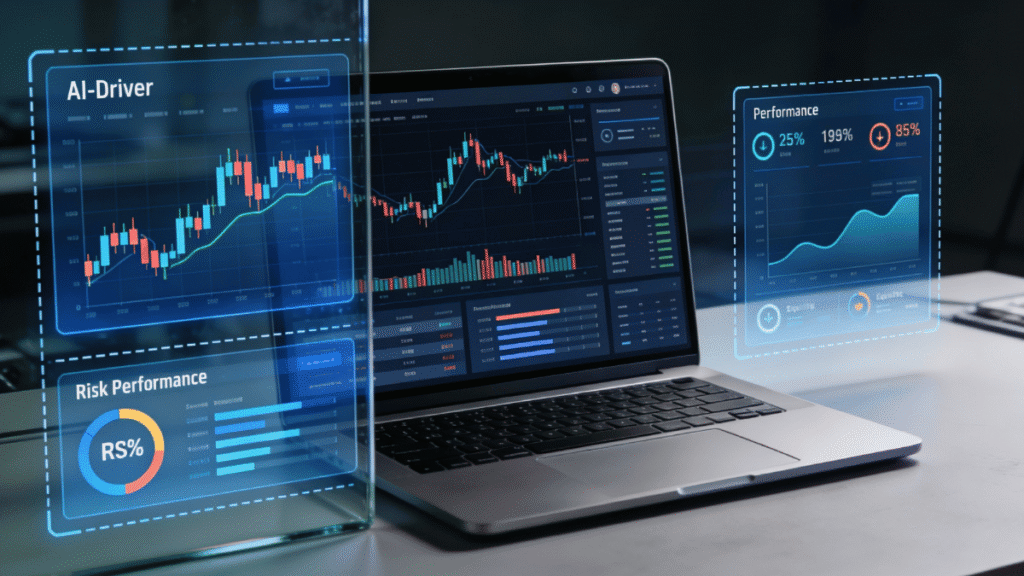
The prop trading industry continues to evolve alongside advancements in technology. One major development shaping how traders analyze markets and manage exposure is Artificial Intelligence (AI). While many prop firms do not directly provide AI tools, traders increasingly use independent analytics platforms to support decision-making and risk control.
This article explores how AI is being applied in modern trading environments and how it influences strategy and risk awareness.
The Expanding Use of AI in Market Analysis
AI systems process large volumes of market data including price movements, volatility levels, and historical behavior. Through machine learning, these tools recognize patterns and market conditions that may not be immediately visible through manual analysis.
Common applications include:
- Trend detection tools
- Volatility monitoring systems
- Market sentiment analysis
- Pattern recognition software
These technologies assist traders in evaluating market conditions more objectively.
AI-Supported Trade Evaluation
AI-based analytics help traders review:
- Entry and exit timing
- Risk-to-reward structures
- Trade frequency
- Strategy performance
By studying historical data, traders can better understand how certain strategies perform under different market conditions.
This information supports more structured trading plans, particularly within rule-based prop trading environments.
Technology and Risk Oversight
Risk management remains central to prop trading. AI-powered platforms often provide:
Real-time account metrics
Tracking exposure, drawdowns, and open risk
Performance pattern reports
Highlighting repeated losses or inconsistent behavior
Position-sizing calculations
Adjusted based on volatility and account size
These insights assist traders in maintaining awareness of their trading limits.
Data-Driven Trading Behavior Analysis
Modern analytics tools can examine trading history to identify behavioral patterns such as overtrading, premature exits, or trading during high volatility periods.
This allows traders to review performance with factual data rather than emotional perception.
Ongoing Technology Trends in Trading
As financial technology continues to advance, AI applications in trading are expected to expand further in areas such as:
- Automated performance reporting
- Advanced backtesting models
- Market condition classification
- Enhanced risk visualization tools
These developments are influencing how traders monitor and assess their trading activity.
Conclusion
Artificial Intelligence is increasingly present in trading analytics and risk monitoring tools used across financial markets. While not a replacement for trader judgment, AI provides structured data insights that support analysis and risk awareness.
For prop traders, understanding how these technologies function can help in navigating modern, rule-based trading environments with greater clarity and discipline.
Frequently Asked Questions (FAQs)
1. Is AI commonly used in prop trading?
AI is increasingly used by individual traders and financial technology platforms for market analysis, performance tracking, and risk monitoring. While many prop firms do not directly provide AI tools, traders often use third-party analytics and automation software to support their trading processes.
2. Can AI replace human decision-making in trading?
AI tools are designed to assist with data analysis and pattern recognition rather than replace human judgment. Most traders continue to make final decisions themselves, using AI insights as additional market information.
3. What types of AI tools do traders typically use?
Common AI-supported tools include market pattern recognition software, automated trade journals, performance analytics dashboards, volatility monitoring systems, and strategy back testing platforms.
4. Does using AI guarantee better trading results?
No. AI tools provide data insights and structured analysis, but market risk remains present. Trading outcomes depend on strategy, discipline, market conditions, and proper risk management.
5. Is AI suitable for beginner traders in prop trading?
Many analytics platforms are designed to be user-friendly and can help beginners understand performance metrics and market behavior. However, basic trading knowledge and risk awareness are still essential before relying on advanced tools.
Disclaimer:
The information and data presented in this content are based on sources that we believe to be authentic and reliable. While efforts are made to ensure accuracy, Centrino Trader does not guarantee the completeness or timeliness of this information. The content is not financial, investment, or legal advice and should not be considered a recommendation. Trading in financial markets, including proprietary trading, carries significant risk, and past data or performance does not guarantee future outcomes. Readers are encouraged to verify details independently before making any trading or investment decisions. T&C apply*.