
Prop Trading Glossary: Must-Know Terms for Funded Accounts
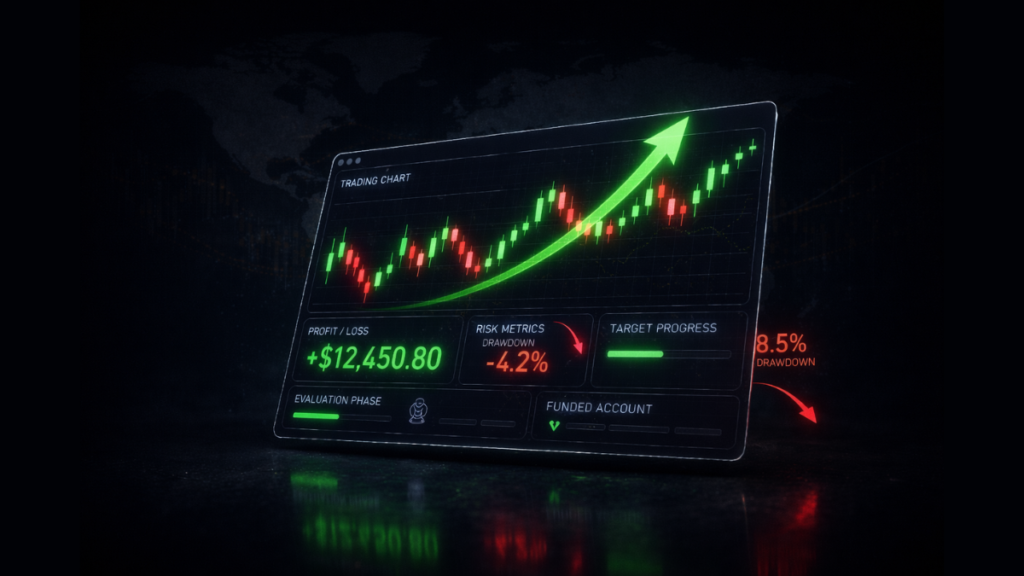
Prop trading challenges come with specific rules, risk limits, and trading conditions that differ from standard trading accounts. Understanding key prop trading terms is essential for anyone participating in funded account programs.
At Centrino Trader, we aim to provide clear information about how prop trading evaluations work. We do not offer trading education, strategies, or guaranteed results. Trading involves market risk, and outcomes depend on individual decisions.
Below is an SEO-optimized glossary of essential prop trading terminology.
What Is a Prop Trading Firm?
A prop trading firm (proprietary trading firm) provides traders with company capital after they pass a trading evaluation or challenge. Traders typically earn a share of the profits while following strict risk rules.
What Is a Prop Trading Challenge?
A prop trading challenge is an assessment phase where traders aim to reach a defined profit target without violating drawdown or loss limits.
What Is a Funded Trading Account?
A funded account in prop trading is the live or simulated account provided after successfully completing the evaluation phase.
What Is a Profit Target in Prop Trading?
The profit target is the specific return a trader must achieve during the challenge period to qualify for funding.
Maximum Drawdown in Prop Trading Explained
Maximum drawdown refers to the total loss an account can experience before breaching challenge rules. It is often measured as:
- Overall drawdown
- Daily drawdown
Exceeding this limit typically results in account failure.
Daily Loss Limit in Prop Trading
The daily loss limit is the maximum amount a trader can lose in one trading day without breaching challenge rules.
Risk Per Trade in Prop Trading
Risk per trade is the percentage of account balance a trader exposes on a single position. Controlled risk helps maintain compliance with drawdown limits.
Leverage in Prop Trading Accounts
Leverage allows traders to control larger positions with smaller capital. While it increases market exposure, it also increases risk.
Trading Rules in Prop Trading Challenges
Prop trading firms set specific trading rules, which may include:
- Risk limits
- Trading hours
- Allowed instruments
- News trading policies
Following these rules is essential to remain eligible for funding.
Consistency Rule in Prop Trading
Some challenges require profits to be spread across multiple trades or days, discouraging reliance on one large position.
Scaling Plan in Prop Trading
A scaling plan may allow funded traders to increase account size after maintaining consistent performance over time.
What Is a Breach in Prop Trading?
A breach occurs when a trader violates challenge rules — such as exceeding drawdown limits — which usually results in account termination.
Evaluation Phase in Prop Trading
The evaluation phase is the initial testing period where trading performance is reviewed before funding eligibility.
Profit Split in Funded Accounts
The profit split defines how profits are divided between the trader and the prop firm after successful trading.
Trading Instruments in Prop Trading
These are the assets traders can trade, such as:
These are the assets traders can trade, such as:
- Forex pairs
- Commodities like gold
- Stock indices
- Cryptocurrencies (depending on firm policy)
Slippage in Prop Trading Explained
Slippage in prop trading refers to the difference between the expected trade price and the actual execution price. It often occurs during:
- High volatility
- News events
- Low liquidity periods
Slippage can affect risk management and profit outcomes.
Why Learning Prop Trading Terms Matters
Understanding prop trading terminology helps traders:
✔ Avoid rule violations
✔ Manage risk responsibly
✔ Navigate funded accounts confidently
✔ Set realistic expectations
Important Risk Notice
Centrino Trader does not offer trading education, signals, or guaranteed results. Trading in financial markets carries risk, and losses are possible.
Disclaimer:
The information and data presented in this content are based on sources that we believe to be authentic and reliable. While efforts are made to ensure accuracy, Centrino Trader does not guarantee the completeness or timeliness of this information. The content is not financial, investment, or legal advice and should not be considered a recommendation. Trading in financial markets, including proprietary trading, carries significant risk, and past data or performance does not guarantee future outcomes. Readers are encouraged to verify details independently before making any trading or investment decisions. T&C apply*.